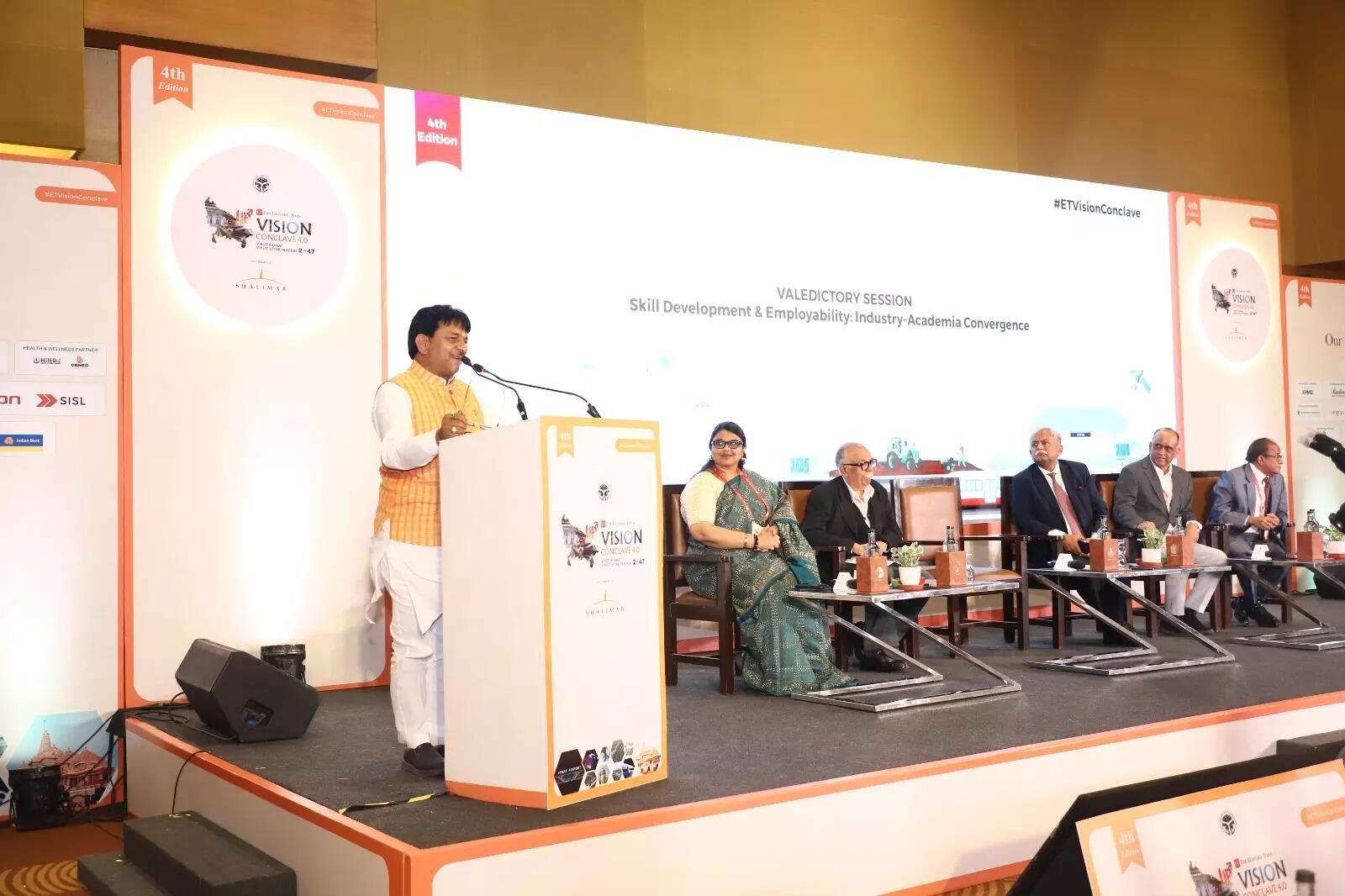
Lucknow: The valedictory session of The Economic Times Vision Conclave — “Viksit Bharat, Viksit Uttar Pradesh 2047” emphasised on the state’s accelerating economic expansion and the centrality of skill development, employability and industry–academia convergence in shaping a future-ready Uttar Pradesh.
Senior leaders and experts highlighted the state’s progress across real estate, healthcare, learning outcomes and skilling, while reinforcing the vision of a $6 trillion state economy by 2047.
Kapil Dev Aggarwal, Minister of State – Independent Charge for Vocational Education and Skill Development, GoUP, said Prime Minister Narendra Modi’s vision of Viksit Bharat is a “collective and continuous national mission”. He highlighted key policy interventions—from financial support for farmers to social protection during the pandemic—that have reinforced inclusive growth.
Aggarwal stressed that the mission’s foundation lies in ensuring that “every citizen has a means of livelihood” and that youth skilling remains central to India’s development journey. “Building a prosperous and equitable society begins with meeting the essential needs of families and empowering young people with employable skills,” he said.
Ambition of a $6 trillion economy
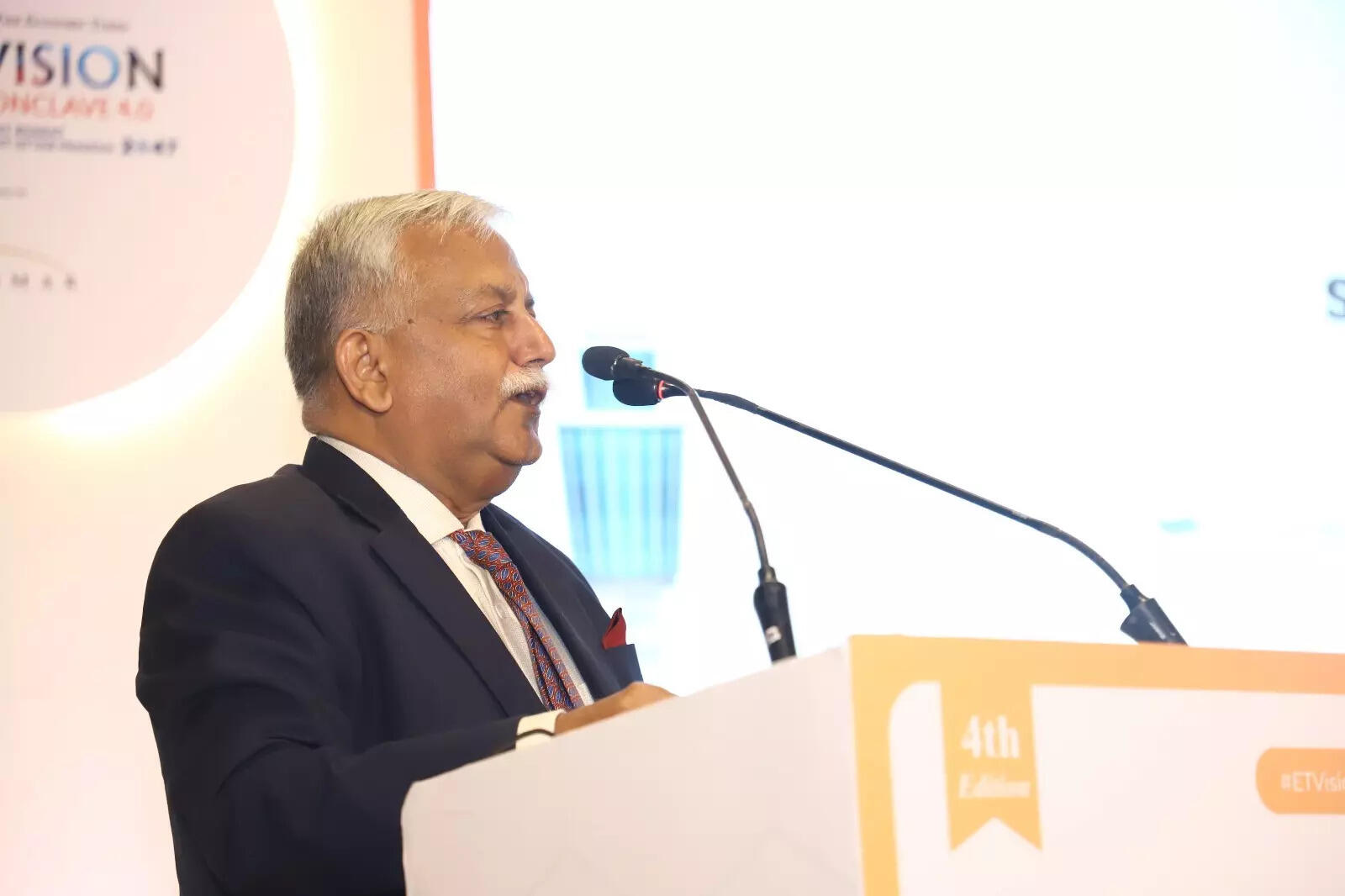
Outlining the state’s long-term economic roadmap, Awanish Kumar Awasthi, Advisor to the Chief Minister of Uttar Pradesh, said the state aims to become a $6 trillion economy by 2047, raising per capita income to ₹25 lakh. He projected that UP’s GSDP will surpass ₹36 lakh crore this year—an important milestone in its development trajectory.
Awasthi said that the government’s planning process is deeply participatory, with over 98 lakh citizen suggestions received under the Viksit UP initiative. “Every minister and councillor is actively involved in this mission. The youth must rise to meet these aspirations, and under Prime Minister Modi’s leadership, these goals are attainable,” he said.
Strengthening learning outcomes and future skills
Advocating a sharper focus on foundational education and workforce readiness, Awasthi cited economist Jeffrey Sachs’ recommendations on enhancing learning outcomes and skilling. Uttar Pradesh’s Class 3 students have outperformed the national average by 10 per cent, and Class 5 students are at par, he noted. However, outcomes in Classes 8 and 10 lag behind national benchmarks.
“This is where we must intervene more aggressively,” he said, adding that new-age skilling will be essential to prepare the workforce for emerging opportunities.
Housing growth spreads beyond metros
Sanjay R Bhoosreddy, Chairman, UP RERA, said that Uttar Pradesh has witnessed “remarkable and geographically diversified progress” in housing and urban development since 2017. Beyond major hubs such as Noida and Lucknow, new real estate clusters have emerged in Gorakhpur, Saharanpur, Agra, Mathura and Ayodhya.
He reported that 55,300 housing units were developed in 2023 and 17,000 units completed in 2024, marking steady growth. With 272 projects sanctioned so far this year, availability of apartment units has improved significantly. “Affordable housing remains a core priority, and we are focused on balancing demand and supply across segments,” he added.
Healthcare emerges as a global growth lever
Highlighting India’s expanding role in global healthcare, G N Singh, Advisor to the Chief Minister and former Drug Controller General of India, said entrepreneurship and forward-looking policy have positioned India—and Uttar Pradesh—strongly in the international healthcare economy.
“India today is a net exporter of medical devices, and the upcoming medical devices park will further strengthen this ecosystem,” he said. To sustain momentum, Singh emphasised the need for clinical trials for new drugs and for developing export-oriented human resources.
Healthcare–Pharma–Education synergy for 2047
Bringing the focus to integrated healthcare development, Amod Kumar Sachan, Founder, Chairman & Managing Director, Hind Institute of Medical Sciences, Shekhar Hospital & Amod Foundation, underscored the need for convergence between healthcare, pharma and education.
“If Uttar Pradesh is to offer affordable and accessible healthcare by 2047, we must build an ecosystem where medical education, pharmaceutical innovation and healthcare delivery reinforce each other,” Sachan said.
“Only a seamless, collaborative framework can prepare the state for future health challenges while ensuring quality care reaches every citizen,” added Sachan.
Convergence for a future-ready workforce
The session concluded with a shared resolve: Uttar Pradesh’s path to developed-state status hinges on strengthening industry–academia partnerships, upgrading skills in emerging sectors, and ensuring broad-based opportunities for youth.
With expanding real estate, rising healthcare potential, improved learning outcomes and an ambitious economic roadmap, the state is preparing to anchor India’s growth trajectory in the decades leading up to 2047.