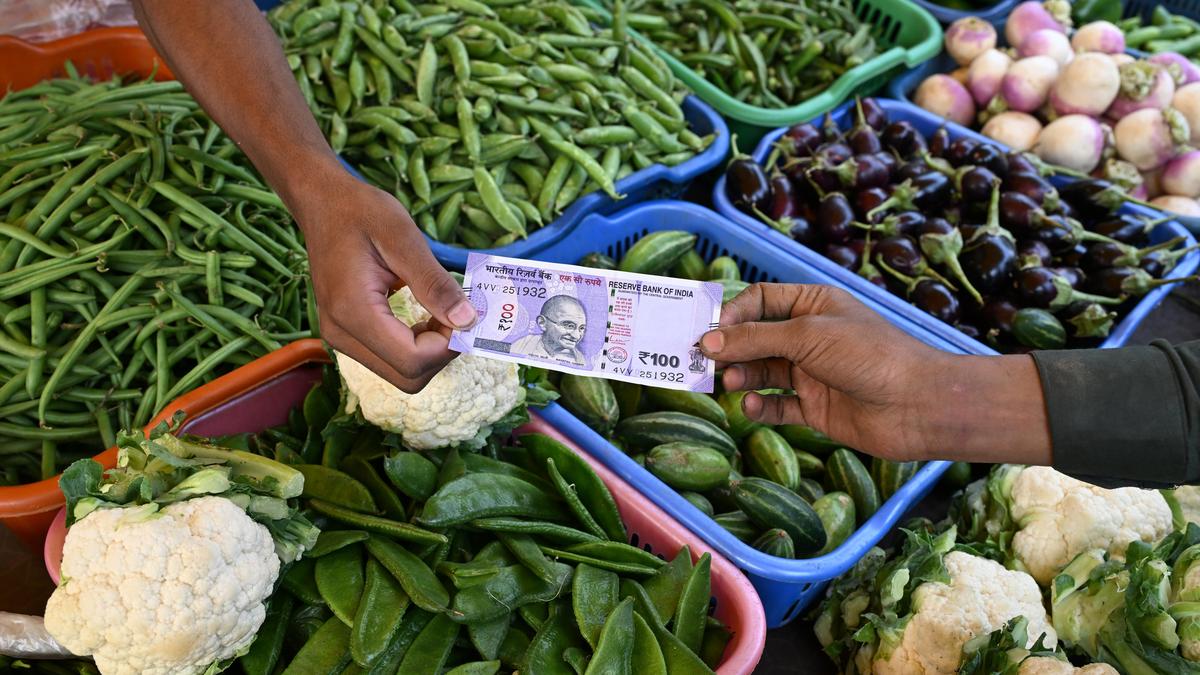
The data shows that the food and beverages category saw prices contract 3.7% in October 2025, following up on a contraction of 1.4% in September. File.
| Photo Credit: Sushil Kumar Verma
Retail inflation fell to a historic low of 0.25% in October 2025, with the government attributing this fall to the first full month’s impact of GST rate cuts, a favourable base effect, and to drop in inflation of several food items such as vegetables and fruits.
According to the government, this is the lowest rate of inflation measured in the current series of the Consumer Price Index. That is, it is the lowest rate of inflation since January 2012.
The data reveals the fall in overall inflation is largely due to the statistical impact of the base effect on food inflation. Most of the other categories in the CPI saw inflation higher in October 2025 than in the same month last year.
“The decline in headline inflation and food inflation during the month of October 2025 is mainly attributed to the full month’s impact of decline in Goods and Service Tax [rates], favourable base effect and to drop in inflation of oils and fats, vegetables, fruits, egg, footwear, cereals and products, transport and communication, etc,” the Ministry of Statistics and Programme Implementation said in its release.
The data shows that the food and beverages category saw prices contract 3.7% in October 2025, following up on a contraction of 1.4% in September. In fact, food and beverage prices have contracted in four out of the seven months of this financial year so far.
According to economists, this decline is however due to a statistical base effect rather than an actual fall in prices. That is, because food inflation in the same month of last year was 9.7%, the change in prices this October looks relatively better.
“Food inflation has come down mainly due to base effects,” Madan Sabnavis, chief economist at the Bank of Baroda said. “In their absence, it would have been higher. Prices of vegetables in particular have increased in the market place.”
The data shows that this base effect in food inflation was the driving factor behind the fall in overall inflation.
For example, inflation in the fuel and light category stood at 2% in October 2025, compared to a contraction of 1.7% in October of the previous year.
Inflation in the housing category, too, accelerated to 3% in October 2025 from 2.8% in October 2024.
The clothing and footwear category was one of the few other than food that saw inflation easing in October, to 1.7% from 2.7% in October last year, likely on account of the GST rate cuts.
The pan, tobacco, and other intoxicants category saw inflation quicken to 2.9% in October 2025 from 2.5% in the same month last year. The miscellaneous category, which captures all other items not included in the major sub-groups, saw inflation accelerate to 5.7% in October 2025 versus 4.3% in October last year.
Retail inflation hits record low
Published – November 12, 2025 04:29 pm IST
