India’s retail inflation quickened to 2.07 per cent in August from an eight-year low of 1.55 per cent in July, driven by fading impact of high base effects, according to government data.
Base effects, which kept headline inflation at multi-year lows in recent months, probably faded in August and coincided with an acceleration in food price rises, which account for nearly half of the consumer price basket.
A Reuters poll of 40 economists had forecast retail inflation in August to accelerate to 2.10 per cent.
The outcome marked the seventh month in a row inflation stayed below the Reserve Bank of India‘s (RBI) 4.0 per cent medium-term target. RBI is mandated to not let inflation overshoot its tolerance range of 2 per cent-6 per cent for more than three quarters in a row.
Food inflation, which accounts for nearly half of the Consumer Price Index (CPI) basket, fell 0.69 per cent compared with a decline of 1.76 per cent in July.
During last month’s Monetary Policy Committee (MPC) meeting, RBI had left rates unchanged at 5.50 per cent and said the inflation outlook was “more benign”. This pause followed three consecutive rate cuts since February, totalling 100 basis points. The committee also retained its Neutral stance.
Fuel and light prices slowed to 2.43 per cent in August from 2.67 per cent in July.
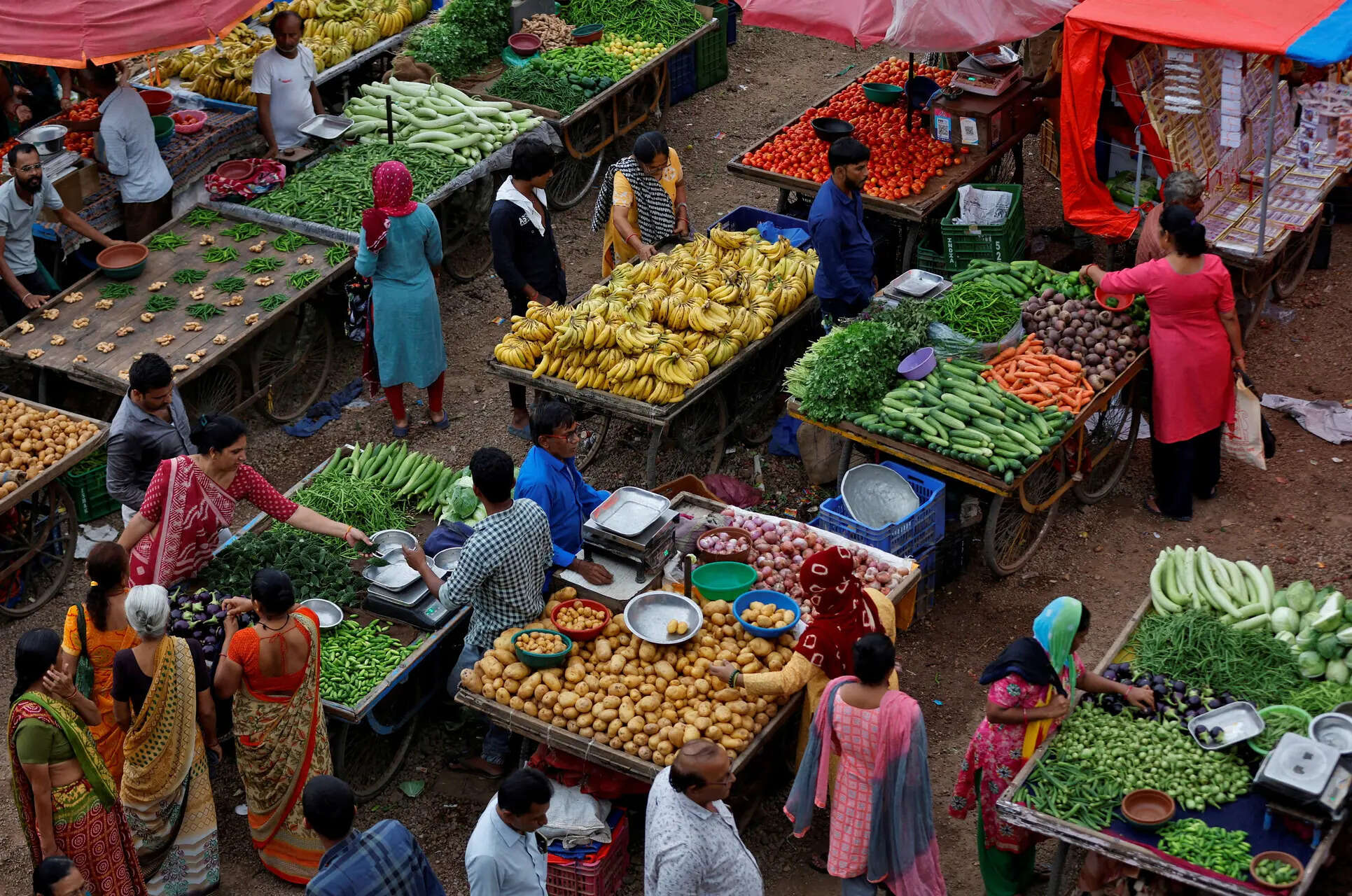
Vegetable prices in August
Vegetable price fell 15.92 per cent in August from a fall of 20.69 per cent in the previous month.Food prices are expected to rise following above-normal rainfall in August, and an expectation of similar showers in
September, which could damage India’s summer-sown crops like rice, cotton, soybean and pulses.
Tax cuts announced by Prime Minister Narendra Modi on food and hundreds of consumer items are expected to lower inflation in the coming months.
RBI’s inflation outlook
The central bank’s MPC last month said that inflation is estimated to go up during the last quarter of FY26, as food prices remain volatile, especially vegetable prices.
While the geopolitical uncertainties have abated, global trade marked by incoming tariffs continues to weigh in, the RBI noted.
For the full year FY26, the RBI has projected headline inflation at 3.1 per cent, lower than the 3.70 per cent forecast made in June. However, the CPI is expected to stand at 4.9 per cent in first quarter of FY27, breaching the apex bank’s 4 per cent target.
Quarter-wise estimates are: 2.1 per cent in Q2, 3.1 per cent in Q3-, and 4.4 per cent in Q4. The central bank maintained that risks to the outlook are “evenly balanced.” The RBI MPC also noted that the core inflation has remained steady at 4 per cent.