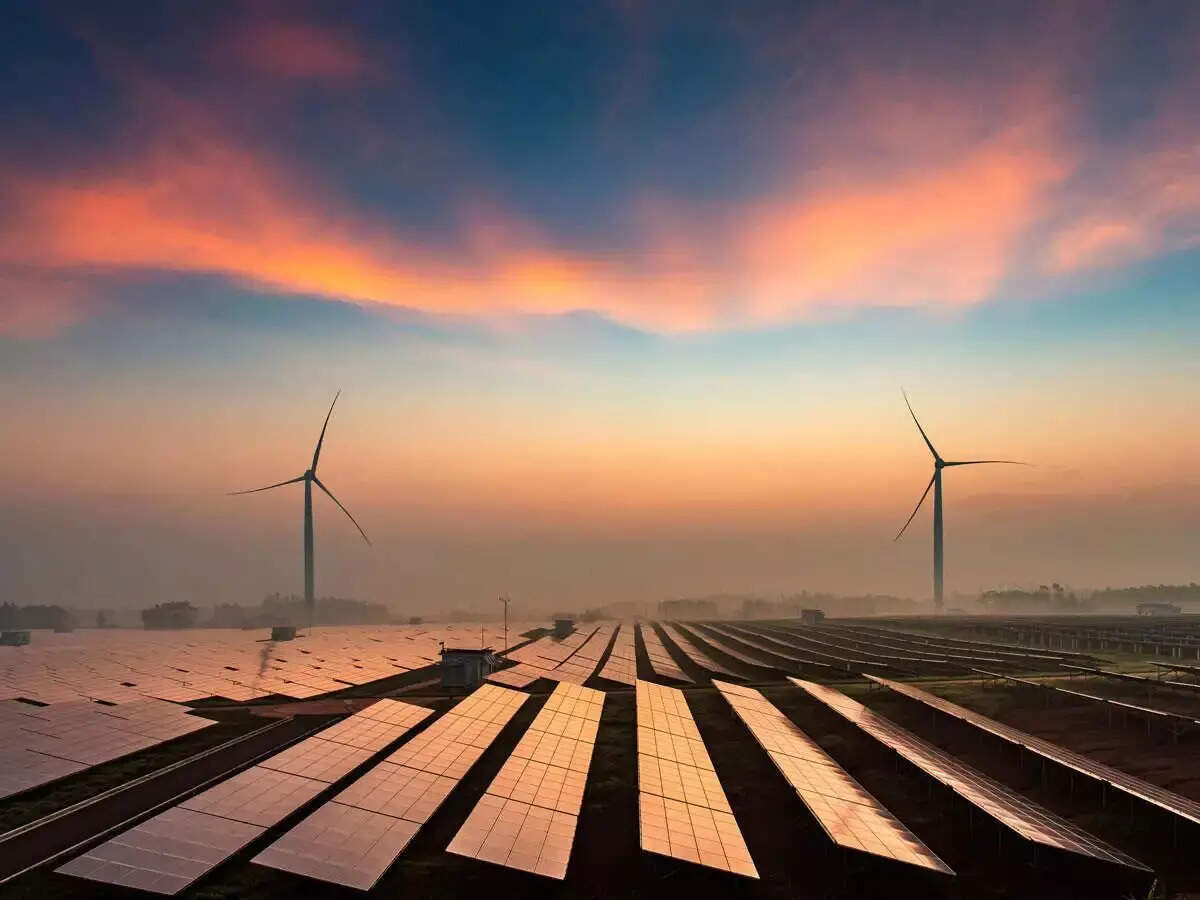
The last decade has reshaped India’s energy imagination. From a country that once relied overwhelmingly on coal, India has become one of the world’s largest solar producers, transforming sunlight into strategy and ambition into infrastructure.
The rise of solar energy is no longer a marginal subplot in India’s developmental narrative; it is central to the nation’s aspirations for sustainability, sovereignty, and global leadership.
Yet this dramatic success also reveals a fragile undercurrent: India remains heavily dependent on imported solar equipment, particularly from China, and must now confront the challenge of building a resilient domestic manufacturing ecosystem.
The Rise of a Solar Powerhouse
India’s solar capacity has surged to nearly 130 gigawatts in 2025—a monumental leap from just a few gigawatts a decade ago. This is one of the fastest expansions of renewable capacity in the world and a defining feature of India’s clean-energy transition. The Panchamrit commitments announced at COP26 created a national framework for this transformation, with targets such as achieving 500 gigawatts of non-fossil capacity by 2030 and reaching net-zero emissions by 2070.
Prime Minister Narendra Modi captured this ambition clearly when he stated at an international solar gathering in 2024: “This speed and scale will also help India achieve 500 Giga Watt non-fossil capacity by 2030.” He emphasised that India’s solar growth depends on “awareness, availability and affordability,” marking a shift toward a people-centric renewable-energy ecosystem designed to reach every home, farm, and community.
These commitments have reshaped the country’s energy architecture. Solar parks have spread across 13 states, rooftop installations have reached millions of households, and programmes such as PM-KUSUM have enabled farmers to become both energy consumers and energy producers. What was once an experiment is now a national infrastructure.
President Droupadi Murmu articulated the deeper philosophy behind this transformation during the 2025 Assembly of the International Solar Alliance, remarking that solar energy represents “empowerment and inclusive development.” Her statement reflects the social mandate of India’s solar journey: sunlight must uplift, not merely illuminate.
India’s Solar Diplomacy and Global Leadership
India’s domestic solar expansion has been matched by its assertive solar diplomacy. As the founding member and host of the International Solar Alliance, India has emerged as a leading voice for equitable access to clean energy. More than 125 countries participate in ISA deliberations, many of whom look to India for guidance on technology, finance, and policy design.
Prime Minister Modi has consistently championed a global approach to renewable energy. At the Glasgow climate summit, he noted: “In one hour, the earth’s atmosphere receives enough sunlight to power the electricity needed by every human being on earth for a year.” This powerful observation underscores the abundance of solar energy and the necessity of global cooperation to harness it.
India’s most ambitious diplomatic proposal, One Sun, One World, One Grid (OSOWOG), aims to interconnect renewable-energy grids across continents. If implemented, OSOWOG would fundamentally alter global energy flows, creating a transnational solar network where sunlight from one region could light up another thousands of miles away.
Such initiatives have elevated India’s position in global clean-energy governance. The ISA now speaks of itself as an international “solar family,” a phrase used by India’s leadership in 2025 to describe the diversity of nations—large and small, rich and developing—that are now part of a shared solar future.
The Manufacturing Paradox: Strength in Deployment, Weakness in Production
Yet beneath India’s solar triumph lies a critical vulnerability: a majority of the solar modules, wafers, cells, and inverters used in Indian installations are imported. China dominates the global solar supply chain across every major segment, from polysilicon to high-efficiency cell technologies. While India leads in solar deployment, it lags sharply in domestic manufacturing.
India has launched significant efforts to address this imbalance. The Production Linked Incentive (PLI) scheme for solar photovoltaic modules aims to create a gigawatt-scale industry capable of supporting national and global demand. But even as the scheme attracts investment, the upstream ecosystem—polysilicon refineries, wafer fabrication units, and advanced cell manufacturing—remains at an embryonic stage.
Prime Minister Modi’s repeated emphasis on availability and affordability reveals an implicit recognition of this challenge. Solar deployment must be built on a foundation of self-reliance. In a world marked by geopolitical tension and supply-chain disruption, dependence on imported hardware is a strategic vulnerability.
At the 2025 ISA Assembly, Indian leadership affirmed that the global solar transition should be “inclusive” and “resilient,” two words that carry layered significance for India’s own industrial policy. An inclusive transition demands widespread access to solar power; a resilient transition demands domestic manufacturing strength.
Why Manufacturing Matters: The Strategic and Geopolitical Imperative
Solar energy is not just a technological asset; it is a geopolitical lever. The nation that controls solar manufacturing controls the pace and price of global energy transition. Silicon, wafers, cells, and inverters form the industrial backbone of the 21st century just as coal and oil defined the previous two.
Without domestic manufacturing capacity, India risks replacing one form of energy dependence with another. Instead of relying on imported fossil fuels, it may become dependent on imported photovoltaics. The challenge is not simply economic—it is strategic. Energy sovereignty in the age of climate change depends on industrial sovereignty.
This connection between energy and strategy has been repeatedly emphasised by Indian policymakers. The message is clear: India cannot afford to lead globally in solar deployment while lagging domestically in solar manufacturing.
Completing the Solar Revolution: The Road Ahead
India’s solar journey is incomplete without a robust manufacturing ecosystem. The next phase of India’s solar strategy must therefore focus on upstream integration. Domestic polysilicon production, wafer fabrication, and high-efficiency cell technologies such as TOPCon and future perovskite innovations must become national priorities. Long-term finance, strategic R&D partnerships, and supply-chain diversification will be critical.
At the same time, India must continue strengthening its global alliances. Through ISA, OSOWOG, and bilateral clean-energy agreements, India can position itself not just as a consumer or market, but as a global co-architect of the energy economy.
The goal is not merely to install more solar panels, but to build them. Not merely to adopt clean energy, but to shape its future. Not merely to shine under the sun, but to forge sovereignty through it.
Toward Solar Sovereignty
India’s solar revolution is one of the defining achievements of its modern development story. It has brought clean energy to millions, empowered farmers, reshaped rural landscapes, and elevated India’s standing in international climate diplomacy. The country has demonstrated that rapid, large-scale renewable deployment is possible in a developing economy—setting an example for the world.
But true leadership requires mastering not just deployment, but manufacturing; not just consumption, but production. India must now match its solar success with domestic capacity, technological innovation, and industrial resilience.
As Prime Minister Modi affirmed, India’s renewable-energy transition rests on awareness, availability, and affordability. To complete this vision, India’s solar journey must evolve from rapid expansion to self-reliant consolidation. The sun may shine equally on all nations, but only those that build, innovate, and manufacture will truly command their energy destiny.
India has already illuminated the world with its solar rise. The next chapter is about ensuring that this radiance is powered by its own hands, its own factories, and its own vision.
(Anoop Verma is Editor-News, ETGovernment; Views expressed are personal)